FMEA: anticipating a pack's failures before production
A cap that leaks, a tamper-evident band that breaks too early, an incomplete thread: each defect has a cause, and most can be anticipated. FMEA is the method that forces you to look for them before they happen.
By Tecmom editorial team · 2 min read
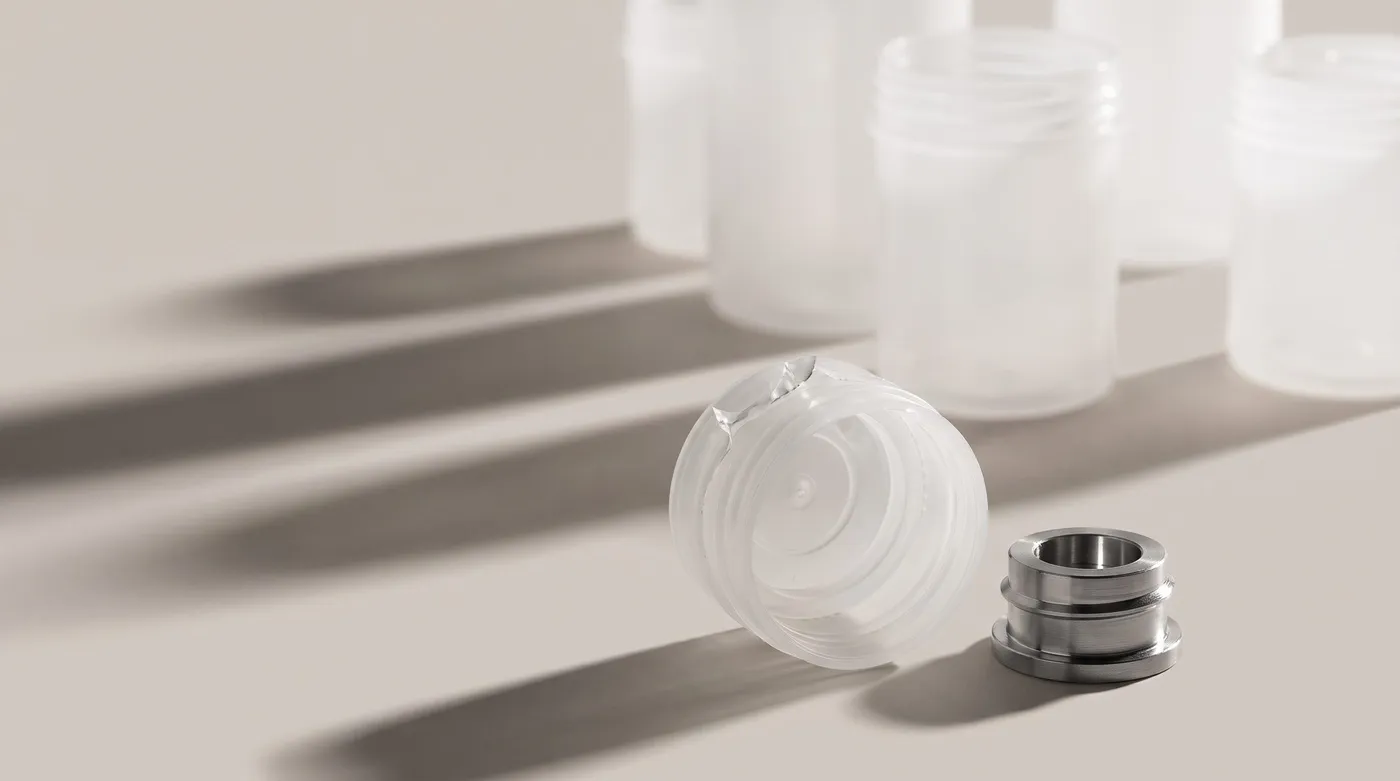
A method from engineering
FMEA, failure mode and effects analysis, is called FMECA when criticality is added. The international standard IEC 60812, revised in 2018, explains how to plan, perform, document and maintain it. Its purpose is simple: to establish how a product or process might fail to perform its function, so that treatments can be decided.
In the pharmaceutical industry, the ICH Q9 guideline on quality risk management lists it among the recognised tools.
Three questions per failure
The analysis is done as a team, function by function. For each failure mode, three questions are asked: how severe would the effect be? How often could the cause occur? Would the defect be detected before it reaches the customer?
Each answer is given a score, often from 1 to 10. Their product, the risk priority number, ranks the failures: those that combine severity, frequency and poor detection are treated first. The 2018 standard also proposes other ways of combining the scores, such as a criticality matrix.
The example of a cap
For a tamper-evident cap, the design FMEA examines the design: a thread too short that lets liquid through, band bridges too strong to allow opening, or too weak, breaking during capping.
The process FMEA examines manufacturing: a short shot caused by a setting, a worn cavity, a badly dried material. For each cause, it sets a prevention, in the mould or the settings, and a detection: visual check, measurement, opening test.
A document that lives with the product
An FMEA is not done once and for all. It is revisited at every change of mould, material or process, and at every observed defect it had not foreseen. It feeds the production control plan; see statistical process control.
For a manufacturer that designs its own moulds, it links two trades: the mould maker, who prevents in the steel, and the quality engineer, who detects on the part. See our expertise.
A good FMEA does not eliminate defects. Above all, it keeps them from being discovered at the customer's site.
Glossary
- FMEA
- Failure mode and effects analysis; FMECA when criticality is added.
- Failure mode
- A way in which a product or process may fail to perform its function.
- Risk priority number
- The product of the severity, occurrence and detection scores.
- Cavity
- The hollow in the mould that gives the part its shape.