Counterfeit medicines: what packaging can prove
A fake medicine looks like a real one: that is the whole point. Against it, packaging is no absolute barrier, but it can carry evidence. Provided one knows which evidence, and what it is worth.
By Tecmom editorial team · 2 min read
The scale of the problem
In 2017, the World Health Organization estimated that about one medical product in ten was substandard or falsified in low- and middle-income countries. The estimate draws on more than a hundred studies covering 48,000 samples in 88 countries; WHO itself stresses that it only indicates the scale, for lack of complete data.
WHO distinguishes two cases. A substandard product is authorised but fails to meet its quality standards. A falsified product deliberately misrepresents its identity, composition or source.
What Europe requires
The European Union responded with Directive 2011/62/EU on falsified medicines. Since 9 February 2019, prescription medicines carry two safety features, defined by Delegated Regulation (EU) 2016/161: a unique identifier, which allows each pack to be verified before it is dispensed, and an anti-tampering device, which shows whether the pack has been opened.
In Morocco, Law No 27.26 amending the medicines code, adopted by Parliament in June 2026, strengthens post-marketing control and the fight against counterfeits, according to the health minister.
The role of primary packaging
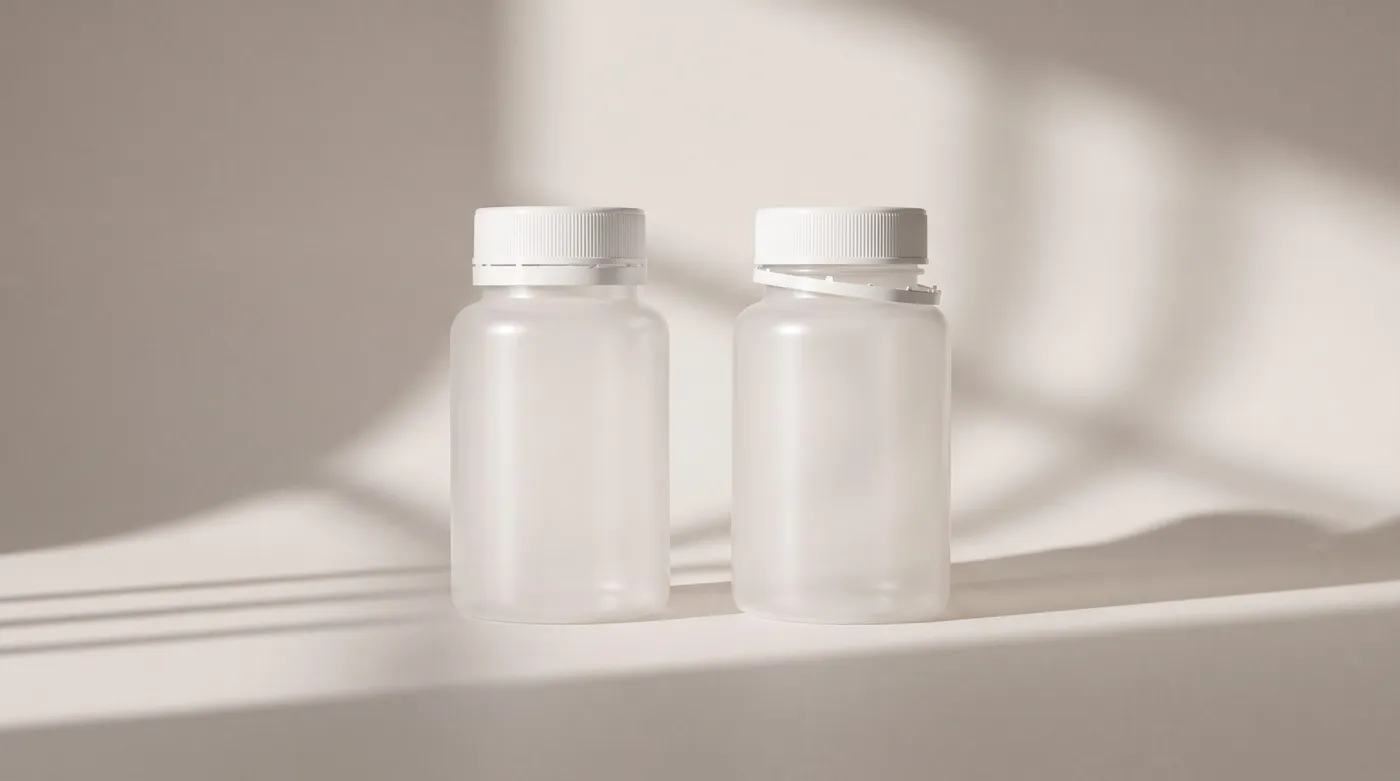
The unique identifier sits on the carton. The bottle brings another kind of evidence: proof of first opening. A tamper-evident cap, whose band separates on first unscrewing, or a seal under the cap, show the pharmacist and the patient that nobody opened the bottle before them. See tamper-evident packaging.
These indicators do not prove a medicine is genuine: a counterfeiter can copy a bottle. They prove that a genuine bottle has not been opened. That is why safety features are layered, from carton to bottle.
A chain of evidence
Against falsification, no single element is enough: a genuine pack, a verified identifier, proven first opening, a controlled distribution chain. The packaging maker contributes through the consistency of its parts and their lot-by-lot traceability. See pharmaceutical packaging.
Packaging does not make a medicine genuine. It makes fraud harder and opening visible. That is modest, and it is precious: a patient's trust often rests on that small intact indicator.
Glossary
- Falsified medicine
- A product that deliberately misrepresents its identity, composition or source.
- Substandard
- An authorised product that fails to meet its quality standards.
- Unique identifier
- A code specific to each pack, verified before dispensing.
- Anti-tampering device
- A feature that shows whether a pack has been opened.