Morocco's pharmaceutical industry: the packaging share
Local production of medicines is discussed in terms of molecules, plants and authorisations. Less is said about what holds them. Yet a medicine made in Morocco needs qualified bottles, caps and pill containers, and those choices go into its file.
By Tecmom editorial team · 2 min read
A framework being reshaped
Medicines in Morocco have been governed since 2006 by Law No 17-04 on the code of medicines and pharmacy. The institutional landscape has changed since: Law No 10-22 created the Moroccan Agency for Medicines and Health Products, whose bill was adopted in committee in the House of Representatives in February 2023. Presented by the health minister as a tool of medicines sovereignty, the agency is described by the business press as a break with the former Directorate of Medicines and Pharmacy.
In June 2026, Parliament adopted Bill No 27.26, which amends that code. The health minister presented it not as an overhaul but as targeted amendments: strengthening the agency's authorisation, control, inspection and pharmacovigilance tasks, tightening post-marketing control of medicines, allowing non-compliant products to be withdrawn and fighting counterfeits.
Figures to handle with care
What share of the medicines used in Morocco is made there? Published figures vary by source, year and what they measure: units, value or volume. Lacking a recent, consistent official series, this article retains none.
Manufacturers with production sites belong to a federation, now the FMIIP, formerly AMIP.
What local production asks of packaging
A medicine made locally must be packed locally, or bring its packaging from far away. Yet primary packaging, the pack that touches the medicine, is not an ordinary purchase. Its material, seal and stability go into the authorisation file; changing it must be justified to the authority. A laboratory does not change bottles the way one changes cartons.
The consequence is twofold. The primary packaging supplier must be qualified under the good practice rules for packaging materials, those of ISO 15378. And the relationship is long: once a bottle is in the file, it stays there. See what the standard requires.
Control that travels up the chain
Tighter post-marketing control targets the medicine, but it travels up the whole chain: a packaging defect is handled as a defect of the product. A laboratory therefore has every reason to choose suppliers able to document their materials, their checks and their lot-by-lot traceability.
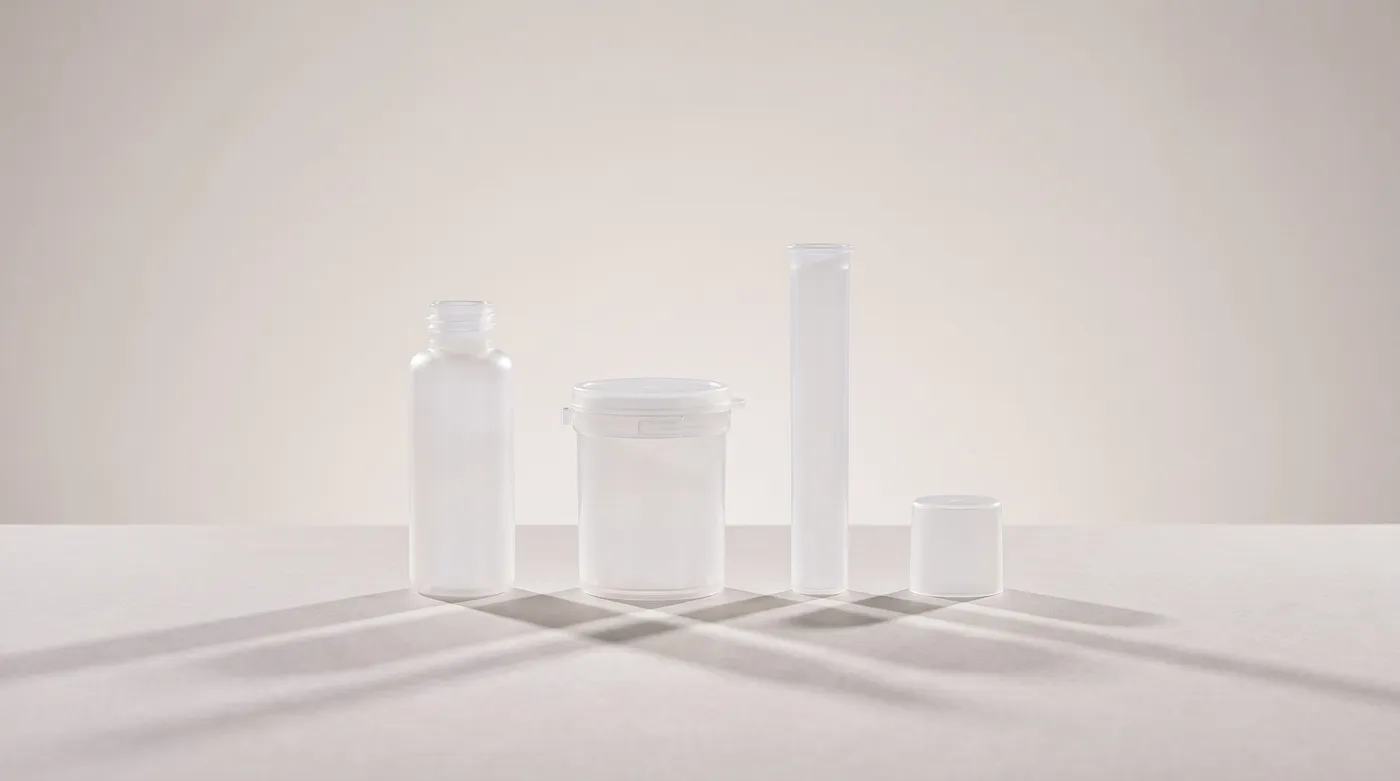
That is the ground of certified packaging makers. Tecmom, in Bouskoura, is certified to ISO 9001 and ISO 15378 and produces, in a controlled environment, bottles, pill containers, rigid tubes and caps for the pharmaceutical and veterinary industries. See pharmaceutical packaging.
Pharmaceutical sovereignty is measured in plants and molecules. It is also measured, more quietly, in bottles: the ones a country can make, qualify and deliver without waiting for a container from elsewhere.
Glossary
- AMMPS
- The Moroccan Agency for Medicines and Health Products, created by Law No 10-22.
- Industrial pharmaceutical company
- A company authorised to manufacture medicines in Morocco.
- Primary packaging
- Packaging in direct contact with the medicine, recorded in its file.
- ISO 15378
- The standard that applies good manufacturing practice to primary packaging materials.