Polypropylene: the plastic of caps, pill containers and hinges
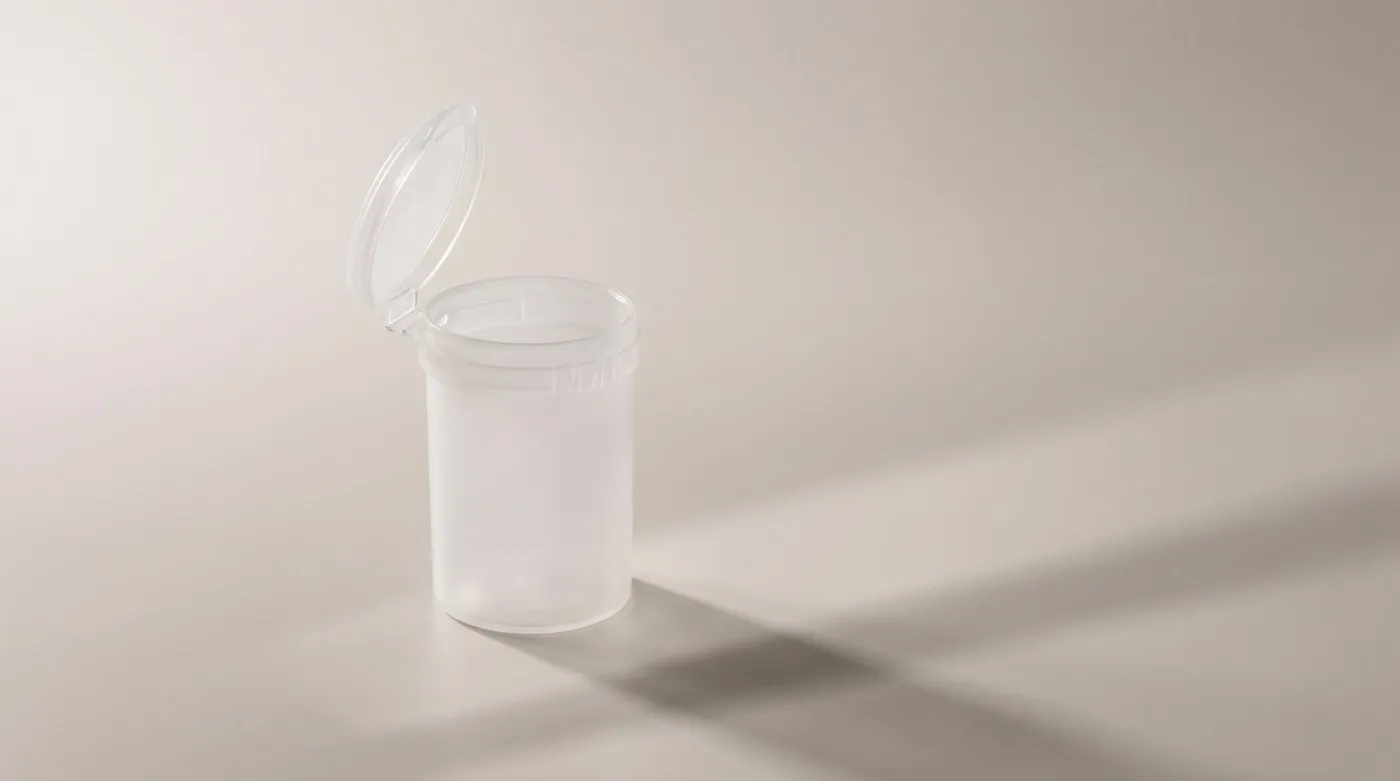
Open a pill container with a flip lid, or a flip-top cap: the small strip of plastic that joins the two parts is almost always polypropylene. This material has a rare quality: it bends without tiring.
By Tecmom editorial team · 2 min read
An everyday material
Polypropylene, or PP, is a thermoplastic made from propylene. It is one of the most widely used plastics in the world, and its resin identification code is 5. It is semi-crystalline, light, and melts at around 160 to 170 °C.
It comes in two main families: homopolymer, which is stiffer, and copolymers, which add a little ethylene to gain impact resistance or clarity. The choice between them depends on the part.
The hinge that does not break
PP has remarkable fatigue resistance: a thin strip of material can be bent back and forth a very large number of times without breaking. That is what allows a lid and its hinge to be moulded in one piece, known as a living hinge.
The hinge comes out of the injection mould finished, with no assembly and no metal part. Its thickness and design are decided when the mould is designed: too thick, it stiffens; too thin, it tears.
Heat, chemicals, sterilisation
PP handles heat better than polyethylene: its melting point leaves a margin above the 121 °C of an autoclave. It resists many acids, bases and aqueous solutions, less so aromatic solvents and strong oxidisers.
One reservation applies to radiation sterilisation: ordinary PP can yellow or turn brittle under gamma rays, which then calls for stabilised grades. The compatibility guide of a major sterilisation supplier, Nordion, advises against unstabilised PP.
Where it is found in packaging
Screw caps, flip-top caps, pill containers with flip lids, rigid tablet tubes: PP is the material of injection-moulded parts that must be precise, light and sometimes mobile. For bottles, HDPE or PET are often preferred, depending on the barrier needed. See our advice page HDPE, PET, PP.
In the Tecmom catalogue, the rigid tablet tubes are PP, as are the 75 ml and 110 ml pill containers with hinged lids.
There is nothing spectacular about polypropylene, and that is its strength. It closes, opens and bends, thousands of times, and all it is asked to do is never get noticed.
Glossary
- Polypropylene
- A semi-crystalline thermoplastic made from propylene, resin code 5.
- Living hinge
- A thin strip of material moulded in one piece with lid and body, which acts as a hinge.
- Fatigue
- Weakening of a material under repeated loading.
- Copolymer
- A polymer made of two monomers, here propylene and ethylene.