Multidose: staying sealed after dozens of openings
Closing a bottle once, on the filling line, is easy. Closing it again every evening for a month, with hurried hands, and still having no leak, is another matter. A multidose bottle's seal is won in the design of the neck and the cap.
By Tecmom editorial team · 3 min read
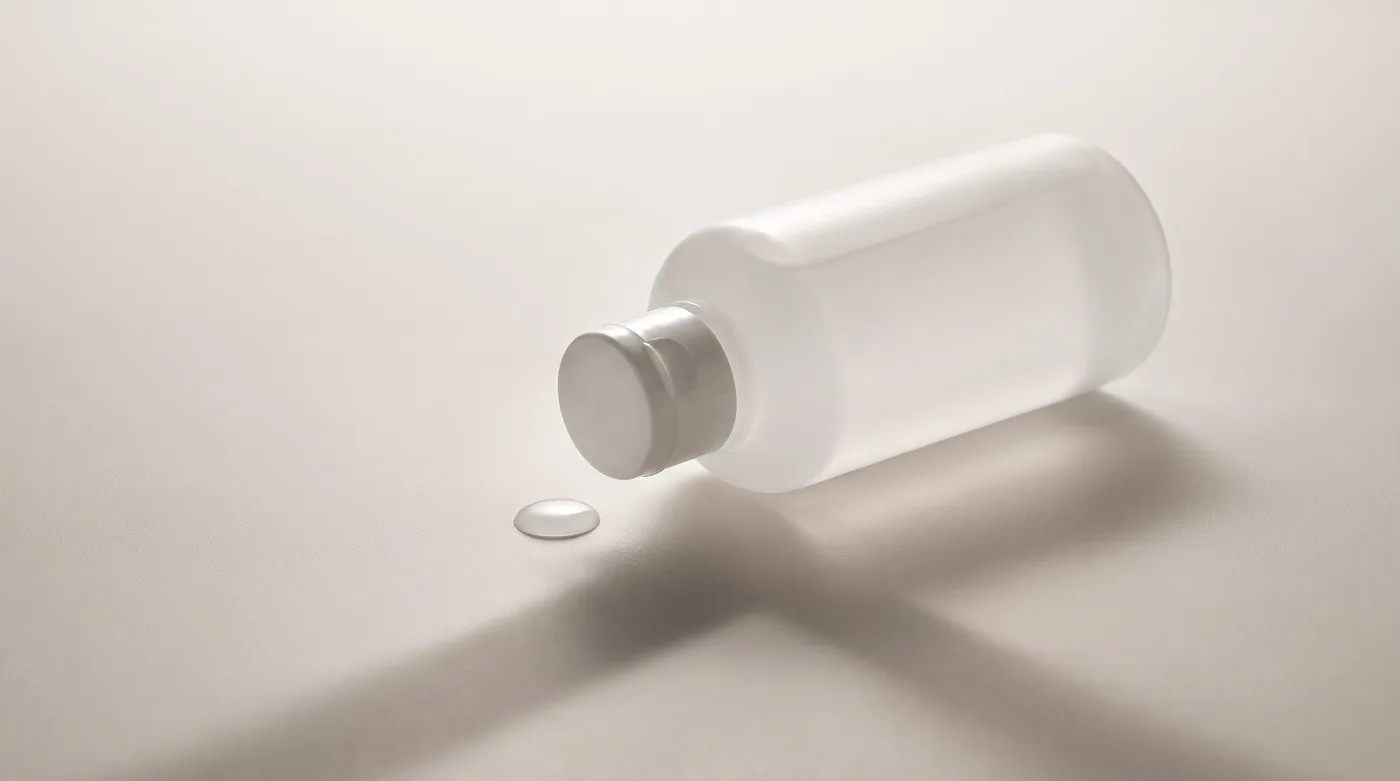
Multidose, a closure that works
A multidose bottle holds several doses: a syrup, drops, a veterinary solution. It is opened and closed at each use. For eye drops, the European Pharmacopoeia limits the period of use after opening to four weeks, unless justified: that is as many opening cycles as the closure has to take.
At each cycle the cap is tightened more or less firmly, sometimes askew, sometimes with product left on the thread. A tight seal on day one therefore says little about day thirty.
Where the seal is made
A screw cap does not seal with its thread. The thread pulls the cap down onto the neck; the seal is made elsewhere, on a sealing surface: the top of the neck against the cap's inner face, an inner lip that hugs the neck, or a separate liner.
That surface must stay clean. Flash, a parting line running across it, an oval neck, and contact is no longer continuous. On an injection-moulded part, such defects cannot be reworked after moulding: they are prevented when the mould is designed. See bottle neck finish.
Time and material
A tightened cap exerts a constant force on the neck. Over time, the plastic can relax under that load, and the tightness can drop. The application torque on the filling line, the materials of cap and neck and the design of the sealing surface must all allow for that ageing.
That is why the FDA treats the container and its closure as a system: one does not qualify a cap alone, but the whole, over time.
How it is checked
Chapter <1207> of the US Pharmacopeia, rewritten in 2016, distinguishes two families of methods for evaluating package integrity. Deterministic methods, such as vacuum decay, produce a reproducible physical signal. Probabilistic methods, such as dye ingress, give a more random result; they remain acceptable when validated for the product and container closure system concerned.
The choice of method depends on the product and the risk: sterile eye drops are not assessed like a syrup.
What the manufacturer does
For a packaging maker, the seal is decided first in the tooling, then in the consistency of production: neck and cap dimensions that do not drift from one lot to the next. Tecmom designs its moulds and checks its raw materials and finished products throughout manufacturing. See quality and our expertise.
A multidose seal cannot be seen; it is confirmed on day thirty, when the bottle lying in a bag has let nothing out. It was drawn long before, on a sealing surface a few millimetres wide.
Glossary
- Multidose
- A container holding several doses and opened at each use.
- Sealing surface
- The surface where cap and neck meet to close the bottle.
- Torque
- The twisting force applied to screw the cap on.
- Integrity
- A pack's ability to prevent any unwanted entry or exit.