Food contact: what migration means
No plastic is perfectly inert. In contact with food it always gives up something, in tiny amounts. The rules do not demand that nothing passes: they set what is allowed to pass, and how much.
By Tecmom editorial team · 3 min read
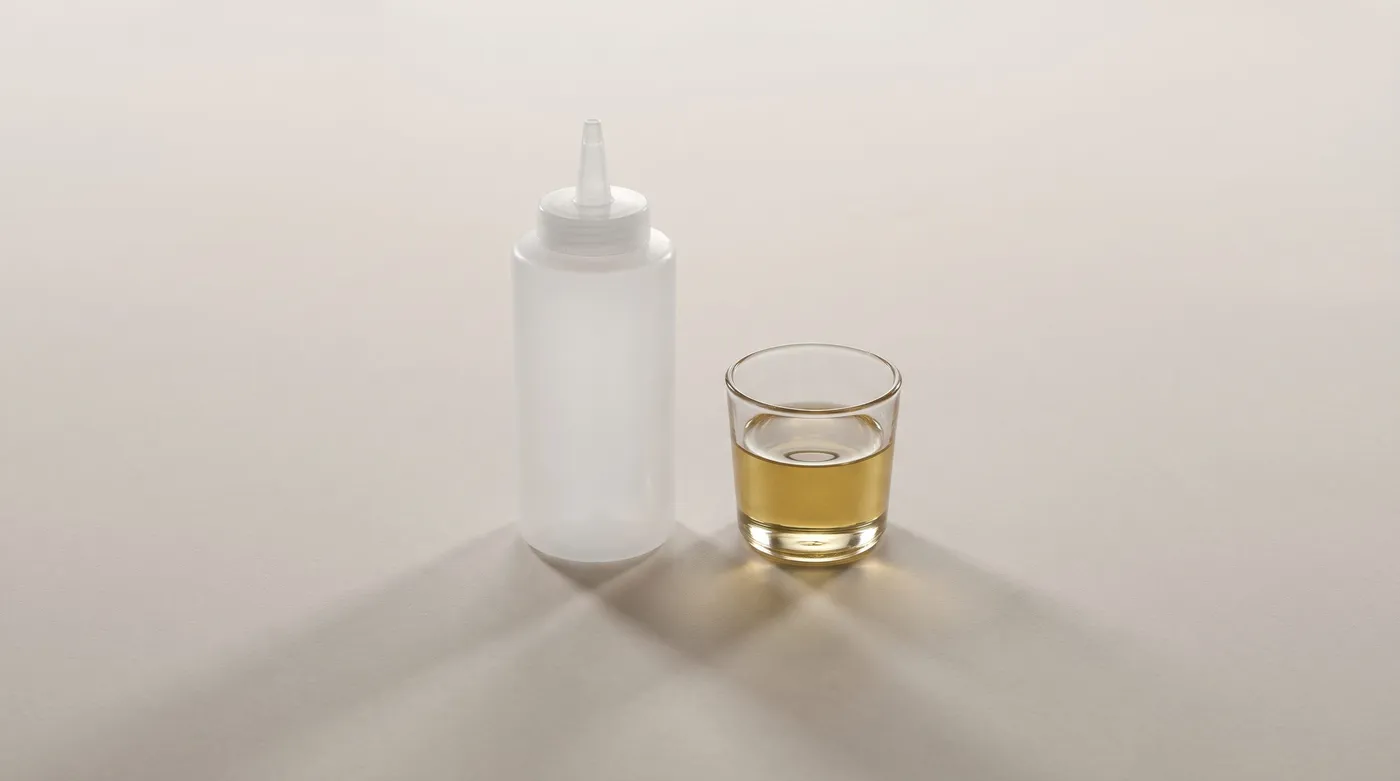
The principle: change nothing in the food
In the European Union, Regulation (EC) No 1935/2004 sets the general rule for all materials in contact with food. They must not transfer their constituents in quantities that could endanger human health, bring about an unacceptable change in the composition of the food, or deteriorate its taste and smell.
The key word is migration: the transfer of substances from the packaging into the food. It depends on the material, but also on the food, the temperature and the duration of contact.
For plastics, lists and limits
Regulation (EU) No 10/2011 spells out the rule for plastics. It lists the substances authorised in their manufacture and sets two kinds of limits:
- an overall migration limit, the total amount of constituents that may pass into the food: 10 milligrams per square decimetre of contact surface;
- specific migration limits, substance by substance, for those that warrant one.
At marketing stages other than retail, a written declaration of compliance accompanies the article.
Testing without the food
Measuring what migrates into a real oil, juice or vinegar would be impractical. Tests therefore use simulants: 10% ethanol for aqueous foods, 3% acetic acid for acidic foods, a vegetable oil for fatty foods. The test duration and temperature reproduce the worst foreseeable conditions of use.
This is where the food sector meets the other markets: the question is not only the material, but what it will touch, for how long and at what temperature. The same bottle may suit water and not hot oil.
And in Morocco?
In Morocco, food safety falls under Law No 28-07 and the national food safety office, ONSSA. For plastics, the technical reference is Moroccan standard NM 11.4.006, on the migration of packaging constituents into food. According to a circular from the Moroccan customs administration dated February 2026, Order No 1701-25 of 3 July 2025, published in the Official Bulletin on 21 August 2025, sets the basic migration rules for plastic materials and articles, referring to that standard.
What a buyer should ask for
For food packaging, three documents say what matters: the article's declaration of compliance, the conditions of use it covers, and, upstream, those of the raw materials. Barrier counts too: against oxygen and moisture, it decides the shelf life of the food.
The Tecmom catalogue notably includes a 125 ml polypropylene bottle with a pouring spout and 1-litre jerrycans intended for food. See food packaging.
"Food grade" is not a property of a material: it is a conclusion, valid for one food, one duration and one temperature. A buyer who asks those three questions already knows what matters.
Glossary
- Migration
- Transfer of substances from the packaging into the food.
- Simulant
- A reference liquid that stands in for the food during migration tests.
- Overall migration
- The total amount of constituents released by the plastic, all substances together.
- Declaration of compliance
- A written document by which the maker states that an article meets food contact rules.