Dosing cups: measuring a syrup without mistakes
A syrup has to be measured, and measuring often happens in the evening, in dim light, with a fidgeting child. The little cup sitting on the cap looks like a detail. Yet the dose actually taken depends on it.
By Tecmom editorial team · 2 min read
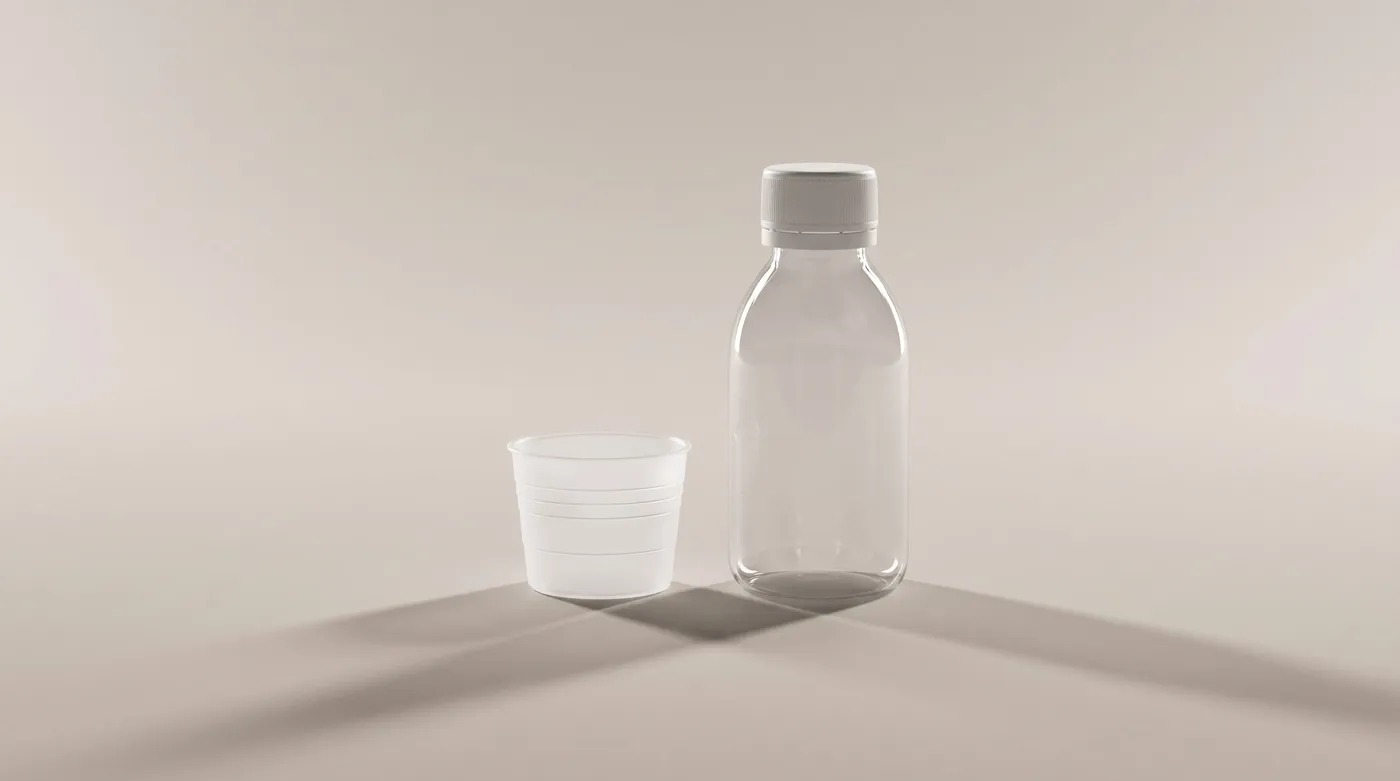
The last link of the dose
A liquid medicine is dosed precisely at the factory, then handed to a patient who has to draw the right amount themselves. The dosing device, cup, spoon, oral syringe or dropper, is the last link in that chain, and the weakest, since it depends on each person's handling and reading.
What studies show
A study published in 2016 in the journal Pediatrics had parents measure doses of liquid medicines with different tools. With a dosing cup, they made about four times as many errors as with an oral syringe. Teaspoon markings, in addition to millilitres, also increased errors.
Since 2011, US authorities have recommended that makers of over-the-counter medicines supply a dosing device with each liquid, marked in the same units as the label.
What makes a good dosing device
- A single unit, the same as on the label, preferably millilitres.
- Legible markings, moulded or printed, with no extra marks that cause confusion.
- Verified accuracy: the real volume at each line must match the stated volume.
- A device matched to the dose: a small volume is measured better with a syringe than with a cup.
The device is read in real conditions, not ideal ones: it must be designed for them.
A part of the bottle
The dosing device often sits on the bottle cap and travels with it. It is part of the medicine's presentation and is described with it. For an injection-moulded cup, the accuracy of the markings is decided, as always, in the mould. See PET syrup bottles and pharmaceutical packaging.
The dose prescribed is not always the dose taken. Between the two lie a small plastic cup and a few lines that must be readable at first glance.
Glossary
- Dosing device
- An accessory supplied to measure a dose of liquid medicine.
- Oral syringe
- A needle-free syringe used to measure and give a liquid by mouth.
- Marking
- A line showing a volume on a dosing device.
- Millilitre
- The recommended unit of volume for dosing a liquid medicine.