Tethered caps: why the cap no longer leaves the bottle in Europe
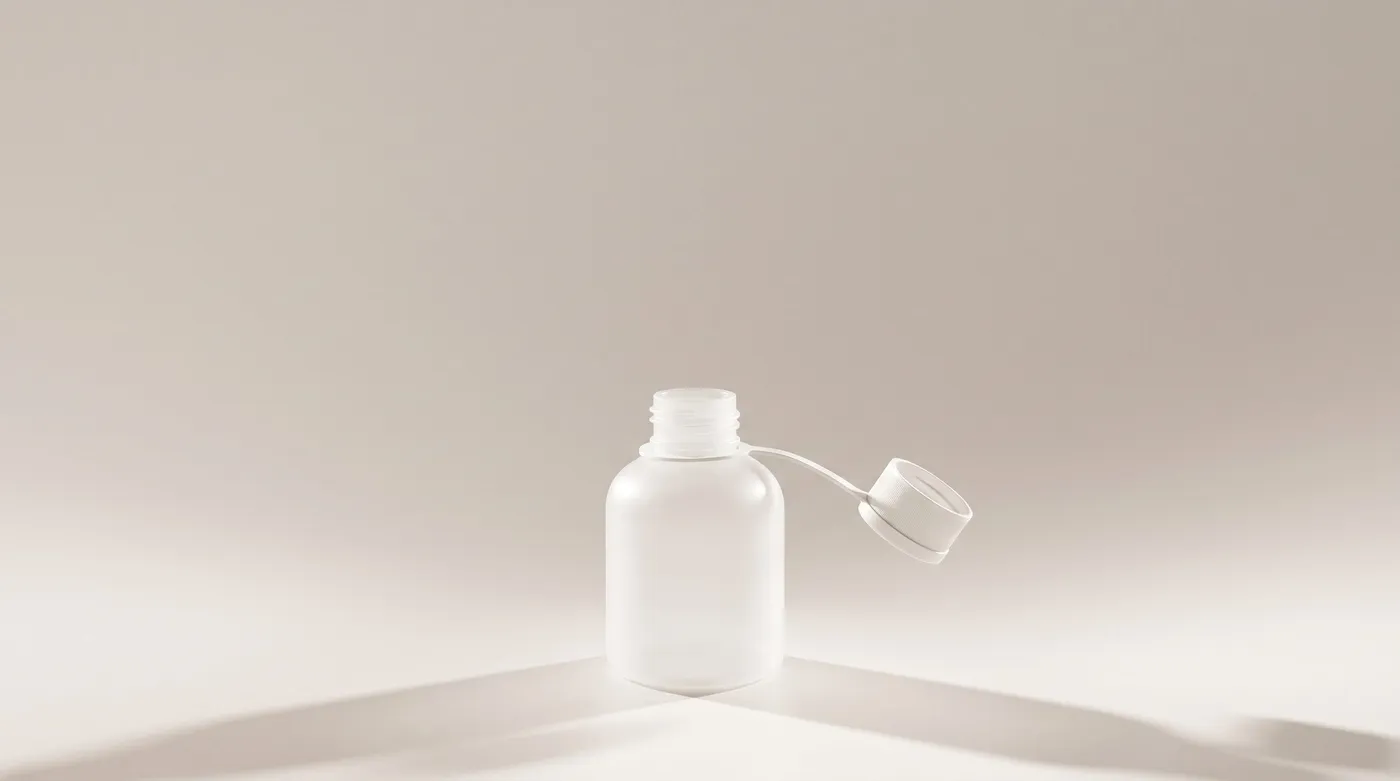
Since summer 2024, in Europe, the cap of a water bottle no longer comes off entirely: it stays hooked to the neck. This small change in habit comes from a directive, and it forced thousands of moulds to be redesigned.
By Tecmom editorial team · 2 min read
A rule against lost caps
Plastic caps are among the items of litter most often found on European beaches. Directive (EU) 2019/904, the single-use plastics directive, addresses this in its Article 6: since 3 July 2024, beverage containers with a capacity of up to 3 litres may be placed on the market only if their plastic cap stays attached during use.
Once tied to the bottle, the cap goes to recycling with it instead of getting lost.
What is covered, and what is not
The rule applies to single-use drinks bottles, including composite cartons, whenever their cap is plastic. Glass or metal containers closed by a plastic cap are excluded, as are drinks intended for special medical purposes.
It does not cover medicine bottles: a syrup is not a drink. Pharmaceutical packaging remains subject to its own requirements, such as child resistance or tamper evidence.
What it changed in the mould
A tethered cap stays linked to the tamper-evident band, the ring that remains on the neck, by one or two strips of material. On opening, these strips must neither break too early nor get in the way of drinking or pouring. Some designs provide a stable open position, held by a small hinge.
These strips and hinges are designed into the mould: cut lines, thicknesses, material bridges. A European standard, EN 17665, sets the test methods that show the cap stays attached.
A constraint turned into a design topic
Cap makers had to reconcile several requirements: keep the seal and the evidence of first opening, avoid making the cap heavier, and remain compatible with existing capping lines. The subject links up with the new European packaging regulation; see our article on the PPWR.
For a manufacturer that designs its own moulds, it is an example of a regulatory constraint that translates directly into geometry.
A tethered cap can be irritating at the first sip. Above all, it shows that an environmental rule always ends up being drawn into a mould.
Glossary
- Tethered cap
- A cap that stays attached to the container after opening.
- Tamper-evident band
- A ring that separates from the cap on first opening and stays on the neck.
- SUP directive
- Directive (EU) 2019/904 on single-use plastics.
- EN 17665
- The European standard for tests that check a cap stays attached.